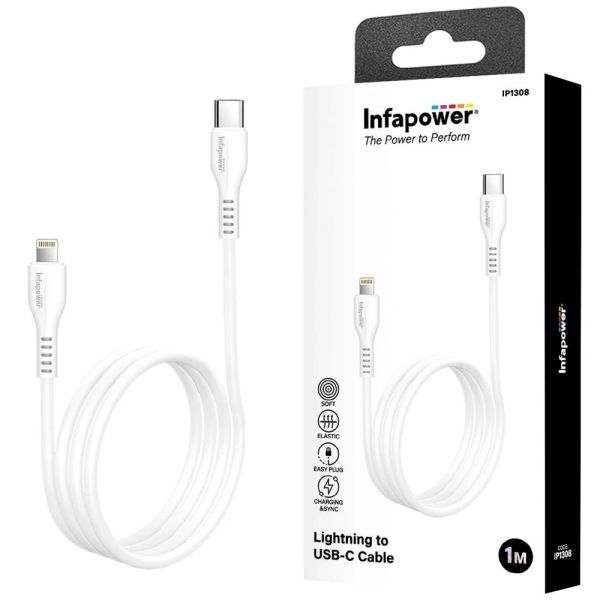
Modern digital life has been informed by a scramble to find the right charger for your device, whether that’s a phone, laptop, tablet or otherwise. Household drawers have been a no-man’s land of jumbled, knotted wires for far too long. But there has been some salvation in recent years, with the USB-C charger becoming the firm market leader for charging cables. But why is that?
In 2026, the USB-C cable has replaced the Lightning, Micro-USB, and chunky USB-A cables in most facets of personal technology. This is due to its innovative design with an impressive capacity for power and data transfer, along with developments in legislation and more. This article will illuminate exactly why the USB-C charger cable is everywhere these days.
European Union USB-C legislation
First and foremost, it’s important to understand that the wide proliferation of USB-C chargers was largely driven by EU legislation. The European Union passed common charger legislation that stated all medium-sized portable electronics, such as iPhones and competitors, had to be built for USB-C wired charging.
With the EU setting the tone, most global tech giants opted to pivot their supply chains, rather than creating regional designs, making USB-C the standard for the rest of the world.
Design features that make USB-C chargers superior
Beyond legislation, there are design elements that make the USB-C such a suitable choice for so many devices.
Power delivery
Older USBs were designed primarily for data transfer, but the USB-C was built specifically for Power Delivery, carrying up to 240W of power. This makes the USB-C universal, so you can charge your earbuds with the same cable you use to charge a 4K monitor, and all in a fraction of the time. This scalability makes it a shoo-in for the broadest application.
It’s reversible
Unlike the USB-A or Micro-USB, the USB-C is symmetrical, with no “up” or “down” in terms of fitting it in place. This saves your ports from physical wear and tear, while also making usability less frustrating for the user. A double sided USB-C is about as convenient as things get.
Data transfer speeds
While definitely designed for charging first and foremost, the USB-C also acts as a high-speed data transfer pipe. The USB-C can transmit data at speeds between 10Gbps and 120Gbps, as well as 8K video signals, all while charging devices. This makes it a much smarter
Smaller form
USB-C cables are much smaller than classic USB-As, which suits the thinner designs of technology in the modern world. The chargers will use much less of the devices ‘internal real estate’, all while offering better capabilities than traditional options.
These are all functional and aesthetic design choices that make the USB-C a lot more suitable and universal for today’s technology.
Reduced environmental & economic impact
One of the wider benefits of the shift towards the USB-C charger revolution is that the world should generally be creating a lot less e-waste. The initial corporate strategy of planned obsolescence has forced device owners to throw old items away and purchase new ones every few years. This is a thing of the past in this new era.
In the same vein, manufacturers can also stop shipping as many new cables with devices, with people able to use one cable to charge and transfer data between different items in the house.
Embrace the USB-C charger
So why is the USB-C charger everywhere? Because it’s better and the EU recognised that! The faster charging and advanced data transfer, as well as the avoidance of planned obsolescence, simply make it a better choice for everyone. Embrace it and thank the lord you can finally clear that drawer!